
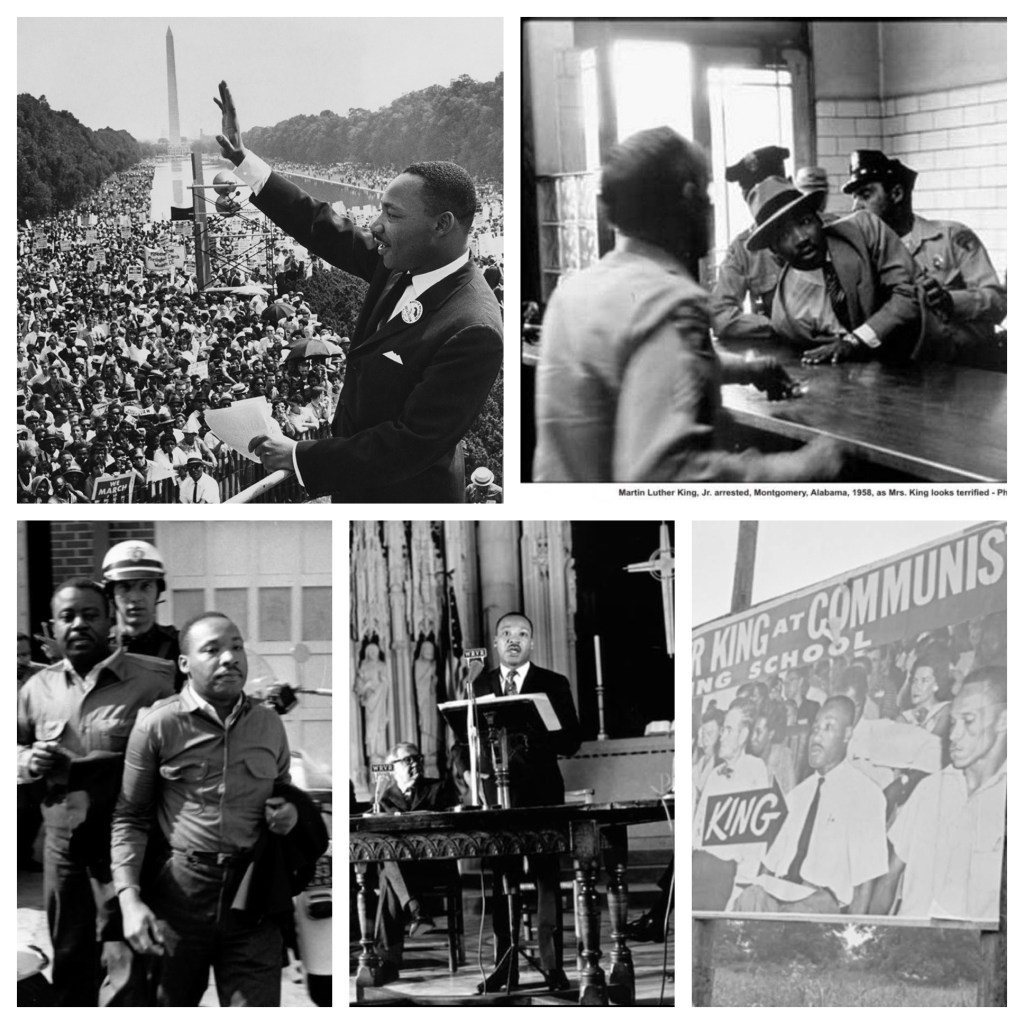
Dr. King was considered a threat to political power. A poll was conducted and he was marked as the most hated man in America. When read in context it isn’t hard to imagine why.
Dr. King’s Christian faith led to him to speak eloquently about the deepest truths of Jesus’ teaching, namely love of neighbor and enemy. But his commitment to the concrete expression of love is what often caused him trouble. He didn’t speak in abstraction or generalities, but in the particular, both past and present.
Here’s post # 2.
The same Dr. King that said:
Returning hate for hate multiplies hate, adding deeper darkness to a night already devoid of stars. Darkness cannot drive out darkness; only light can do that. Hate cannot drive out hate; only love can do that.”
In his 1957 sermon, “Loving Your Enemies”
also said this in 1964:
“Our nation was born in genocide when it embraced the doctrine that the original American, the Indian, was an inferior race. Even before there were large numbers of Negroes on our shores, the scar of racial hatred had already disfigured colonial society. From the sixteenth century forward, blood flowed in battles of racial supremacy. We are perhaps the only nation which tried as a matter of national policy to wipe its indigenous population. Moreover, we elevated that tragic experience into a noble crusade. Indeed, even today we have not permitted ourselves to reject or feel remorse for this shameful episode. Our literature, our films, our drama, our folklore all exalt it. Our children are still taught to respect the violence which reduced a red-skinned people of an earlier culture into a few fragmented groups herded into impoverished reservations.”
Why We Can’t Wait,” pp. 119-20
We need Dr. King in context.

 Long Way Here