In Acts 16:16-40, the story goes that Paul sets a slave girl free of a demon (the power of Jesus can do that). The problem is this slave girls well-being ruins her owners’ business plan. They were doing very well profiting from her problems and trafficking on her trouble. And Paul was poking holes in their pocketbook. Like a mob on a mission they drag Paul and his co-worker Silas to the marketplace to settle their grievance with the magistrate and the court of public opinion. People stop buying and selling to see what’s going on. Being the savvy business men they are, the owners accuse Paul and Silas of putting not only their well-being at risk, but the whole city’s well-being at risk too. They plead their case with compelling arguments and clever legal language. The crowd is sympathetic to their losses and cries out for justice. The magistrate has no choice but to judge in their favor. Paul and Silas is stripped, beaten, and incarcerated. That day the Christian message shook the ground of Philipi. It wasn’t an easy-going domesticated message that played well with the values and concerns of moral or political preferences. It was a revolutionary, threatening, and unsettling message of liberation, but only for people who really wanted to be free. That was then. But it could be now. Christians have a choice to make. I pray we will make the right one.
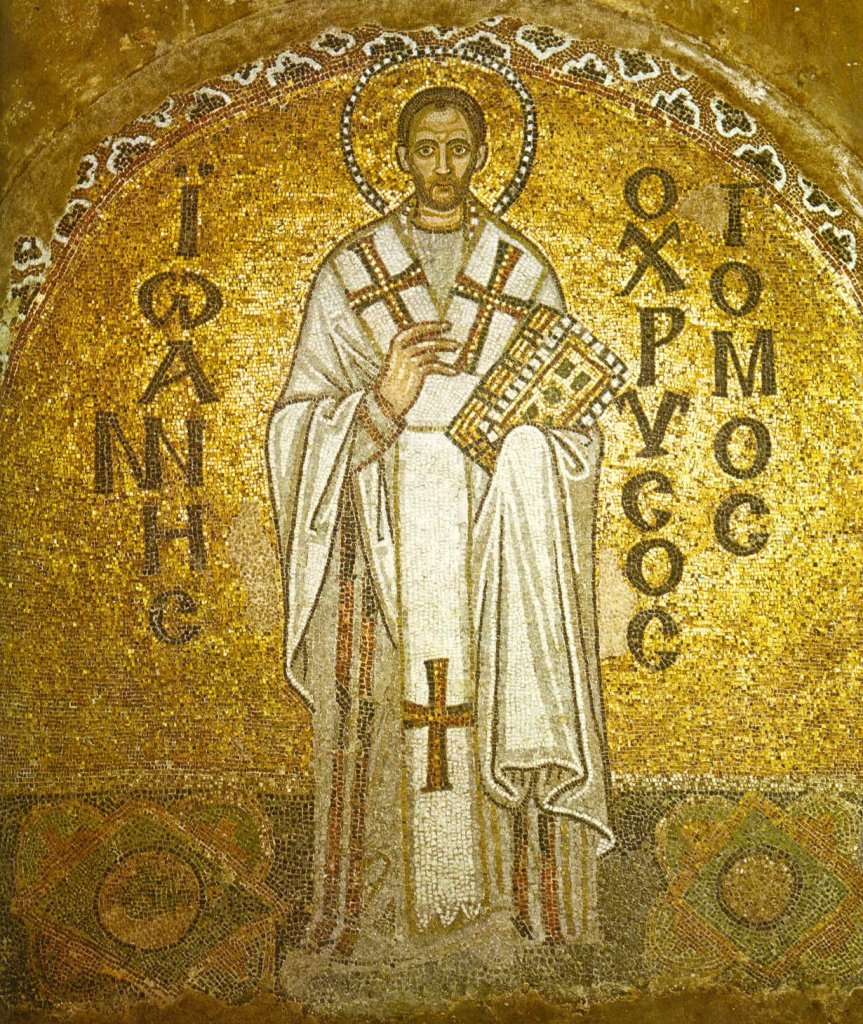
In a message given to Christians living in Antioch during the 4th century at a time of great social and political crisis, John Chrysostom reminds them:
“If you are a Christian, no earthly city is yours. Of our city, ‘The Builder and Maker is God.’ Though we may gain possession of the whole world, we are still but immigrants and foreigners in it all. We are enrolled in heaven: Our citizenship is there! Let us not, after the manner of little children, despise things that are great and admire those which are little! Not our city’s greatness, but virtue of soul is our ornament and defense.”1
Beloved, read this once again. Ask, for what city do I truly live? What do my words and actions reveal, even during this time of crisis? How does my treatment of the vulnerable or hurting serve as a signpost to the city whose Builder and Maker is God?
1. Homily “On Statues,” 17.12. For details surrounding the crisis see Douglas B. Radke, paper, “John Chrysostom, On the statues : a study in crisis rhetoric” (1988).
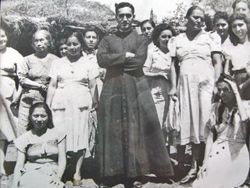
This weekend I was re-reading a collection of essays and sermons from one of my heroes of the faith, Oscar Romero (we even share the same first name!). He was assassinated in 1980 for his stand with the oppressed poor of El Salvador. I will share two excerpts here. Please, take them in.
“A church that does not provoke any crisis, preach a gospel that does not unsettle, proclaim a word of God that does not get under anyone’s skin or a word of God that does not touch the real sin of the society in which it is being proclaimed: what kind of gospel is that?
Very nice, pious considerations that don’t bother anyone, that’s the way many would like preaching to be. Those preachers who avoid every thorny matter so as not to be harassed, so as not to have conflicts and difficulties, do not light up the world they live in. They don’t have Peter’s courage, who told that crowd where the bloodstained hands still here that had killed Christ: “You killed him!”
Even though the charge could cost him his life as well, he made it.
The gospel is courageous; it’s good news of him who came to take away the world’s sins.”
The Violence of Love, pp. 44-45
To the christians that opposed him, he said:
“Some want to keep a gospel so disembodied that it doesn’t get involved at all in the world it must save. Christ is now in history. Christ is in the womb of the people. Christ is now bringing about the new heavens and the new earth.”
The Violence of Love, p. 102
In other words, the gospel has something to say to the concrete realities of every society. The Church must enter in to the injustices and suffering and courageously livethe sermon it preaches. We must become the gospel as participants in God’s mission to save the world.
The Magna Carta of 1215 has a clause that reads, “We will not sell, or deny, or delay right or justice to anyone.”1
In 1617, when Francis Bacon was installed as Lord Chancellor, he said, “Swift justice is the sweetest.”2
In his Letter from Birmingham Jail, Dr. Martin Luther King, Jr., said, “justice too long delayed is justice denied.”
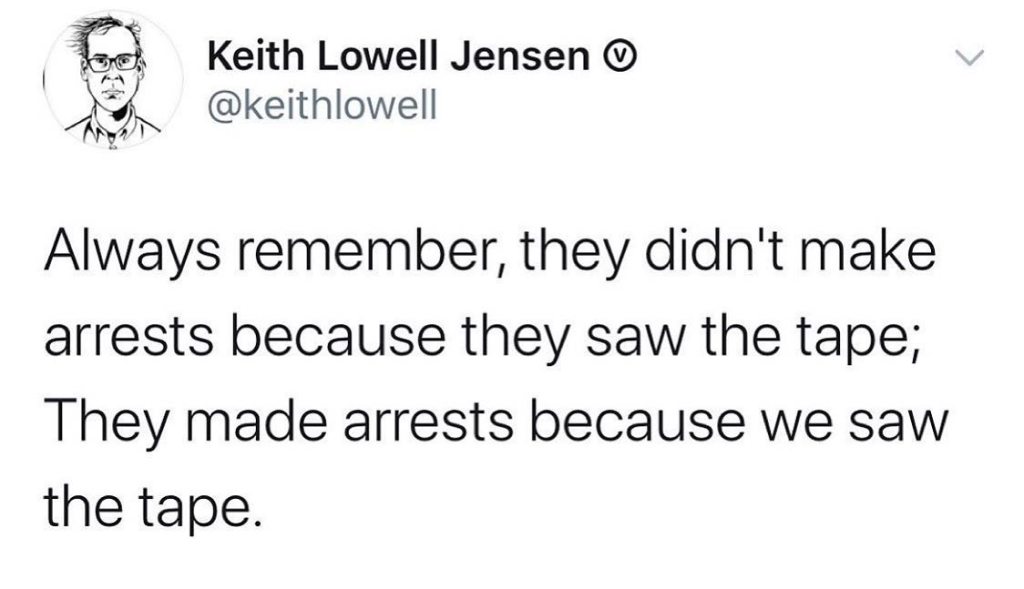
Ahmaud Arbery was shot dead–lynched–February 23. On May 7 the two men were arrested and charged. The day before Ahmaud Arbery’s birthday.
Don’t get me wrong, I am thankful. But it took far too long. Seventy-five days too long.
I received a stirring email this morning from a dear brother and community leader, a Black man who has his own experiences with racially-charged hatred and atrocities. He wrote:
“Lawlessness at the top, malicious abuse of power. Once again lady justice has continued to be the trollop she has constantly been exposed to be, pimped by politicians and people in power. Lady Justice is no longer blind. She has been caught peeping through her blindfold on voluminous occasions. Her blind fold has been replaced with chrome faced sunglasses, adorned with diamond studs. Her scales of justice have been weighed down on one side by the benevolent offerings of the rich, avaricious, powerful element of society preventing her from striking a blow for justice.”
Just because it appears that justice is rolling down like waters for brother Arbery doesn’t mean that white supremacy and the privilege of power won’t do all it can to build a dam.
We’ve seen it time and again with Trayvon Martin, Tamir Rice, Sandra Bland, Atatiana Jefferson, Botham Jean, and others. This story isn’t a one-off for our brothers and sisters with black and brown skin. This is a day-in-the-life.
My beloved white Christians, we still have work to do. Be humble. Be courageous. Be faithful.
“Wisdom shouts out in the streets; in the public square she raises her voice.” (Proverbs 1:20)
True wisdom is never silent around hard things. Wise people must give voice to the truth left unsaid. When we don’t say something, we are saying something.
White Christians talk a lot about racial reconciliation. I’m glad for that. But my reading of the Hebrew and Christian Scriptures teach me that justice is not the same as reconciliation. Justice comes before reconciliation. So injustice must be called what it is and given the name it deserves. Only then can it be seen as a concrete reality woven within the fabric of society and the human heart. Only then can repentance take place. If repentance is genuine, then in the spirit of the faithful Israelite and Judean kings of old, injustice must be dismantled and lamented. Until it is, justice is not complete and reconciliation impossible.
Lynching is understood as “the mob killing of a person suspected of a crime, especially by hanging, that is done outside of the law. Lynching is most commonly associated with the hanging death of Black men by white people in the United States, especially in the Jim Crow South.” (See Dictionary.com)
My hope is that white Christians will openly denunciate the death of Ahmaud Arbery and call it what it is, a lynching as an expression of white supremacy. Ahmaud Arbery was lynched. Not murdered. Not killed. Not shot. Not a victim of a hate crime. He was lynched. To call it anything else, in my sincere opinion, is to turn away from the larger narrative that framed his death: a historical and present narrative of white supremacy at work in our country, especially in my birthplace, the “Deep South.”
White fragility and defensiveness have no place (or purpose) here. My faith teaches me that rhetoric matters. Our words must be chosen carefully, courageously, and concretely in proportion to the sin-stained, sin-soaked actions seen.
I remember the moments when King Jesus chose strong rhetoric. He used words like, ‘white washed walls’ and ‘hypocrisy’ (Matthew 23:27-28) or ‘children of snakes’ (Matthew 12:34; 23:33) or ‘you are of your father the devil’ (John 8:44-47) or tell us that we neglected the ‘weightier matters of the law,’ (Matthew 23:23-24) or even ‘turn over the tables of greed and power (John 2:13-16). King Jesus would eventually offer an invitation to repentance and forgiveness to those on the receiving end of these words. But the threads of faith that are sewn together with the reign of sin and death must be pulled. Words can do that.
Ahmaud Arbery was lynched by the weaponized minds and bloodstained hands of white supremacy. Nothing less. The systems, institutions, policies, ideologies and leaders that support them arm these minds and provoke these hands. They must be seen as they are, called what they are, repented of, and dismantled. The Church of King Jesus must stand with Ahmaud Arbery. We must live into the work for God’s justice and of dismantling the principalities and powers of evil that uphold and promote all forms white supremacy.
But before we can do that, we need to get our language right.
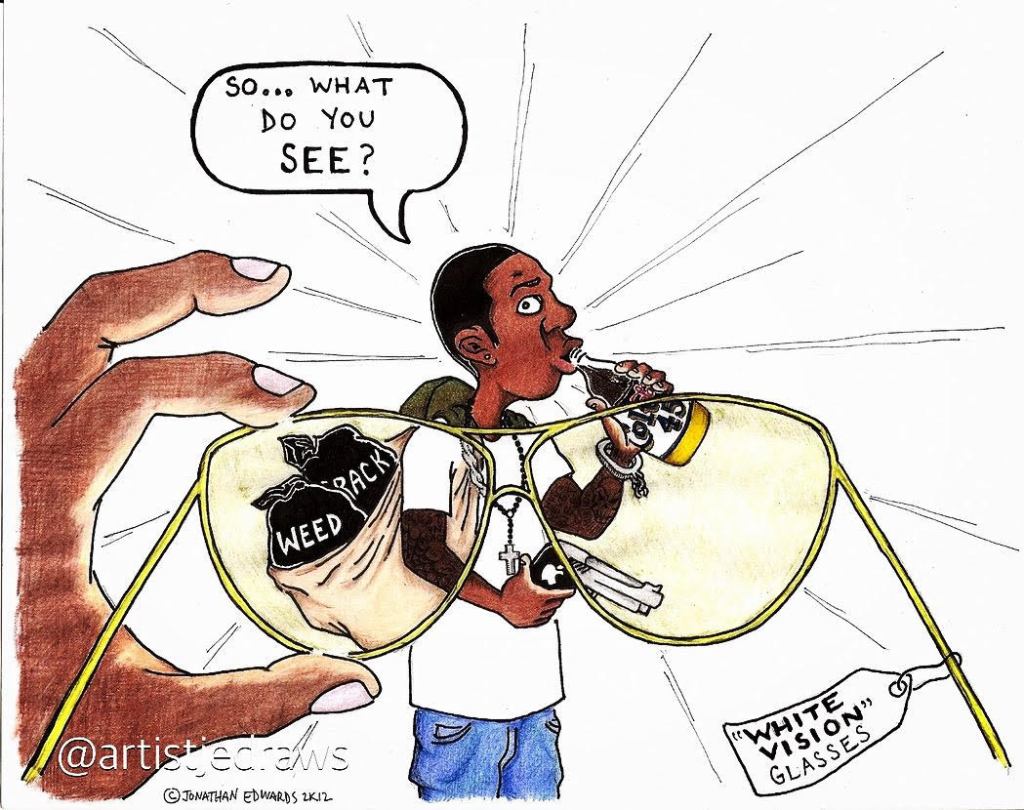
Artwork Jonathan Edwards. Follow him on @artistjedraws I am thankful for his work.
Through Orange Colored Glasses
My dearest mentor, friend, brother, pastor, activist and example. Read it. You won’t be sorry that you did.
Williamsburg Christian Church's Blog
Get Sunday Wrap-Ups, Insights Along The Way, Practical Ways To Live Missionally, Weekly Updates, & Special Announcements

 Long Way Here