Advent & Misguided Discernment

“Let no one deceive you with empty arguments, for God’s wrath is coming on the disobedient because of these things. Therefore, do not become their partners. For you were once darkness, but now you are light in the Lord. Walk as children of light— for the fruit of the light results in all goodness, righteousness, and truth—discerning what is pleasing to the Lord.” Ephesians 5:6-10

“Discerning what is pleasing to the Lord.” Discernment seems to be a lost art. I wonder if it is because many of us have stepped too close to the darkness and the eyes of our heart have adjusted to see, although dimly.

One thing seems evident as I listen to Christian responses (or lack thereof) at what is taking place in national politics: we have become incapable of discerning what is true, good and beautiful. Perhaps it is because many of us have unwittingly changed partners. We have misplaced our hope, peace and joy in a fragile kingdom causing us to unwittingly misplace our allegiance to a fickle and faulty “king.”

Misplaced allegiances result in misguided discernment.

As our beloved bro Paul might suggest, if it doesn’t result in goodness, righteousness and truth it isn’t of the light, my friend. There is nothing good about hatred and fear-mongering. There is nothing righteous about treating women as though they are sexual objects and acting like it is okay. There is nothing truthful about scapegoating, shaming of dismissing the pain of others. These behaviors aren’t the results of a person walking in the light no matter their confession. It is the result of walking in darkness and evidence of a different partnership than partnering with God. And if by chance we cannot see, perhaps we need to take a look at with whom we are partnering.

The season of Advent reminds us that a great light has dawned on those living in darkness.

May we see. May we turn away and turn back to King Jesus. Forsake all other allegiances and change partners. Partner with God. Just know it is going to cost you something. It will cost you friends and reputation, maybe even with those you’ve consider close to you. But it is worth it.

May we see the light and live in the light so we can discern what is pleasing to the Lord and be a light.

Posted in Uncategorized | 1 Comment

Following Jesus & Labelled Lunatics


Unknown


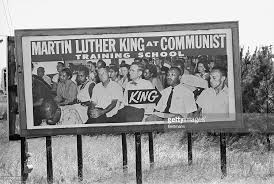
Billboards claiming to identify Dr. Martin Luther King, Jr. at a communist training school stand on the route from Selma, Alabama to Montgomery.

Taking Jesus seriously as Lord may cause some christians to consider you a lunatic. Taking Jesus seriously as Liberator may cause some christians to consider you a liberal. Taking Jesus seriously as King may cause some christians to consider you a conservative. Taking Jesus seriously as Restorer may cause some christians to consider you a radical. Taking Jesus seriously as Advocate may cause some Christians to think you have some sort of agenda.

What all of these possibilities expose is the ideological categories we tend to impose upon Jesus. If you or I are not careful we’ll react to those with a need for these categories and labels and fall into the ideological trap. We may be tempted to return the favor and hand out a few labels of our own. Placing labels upon another demonstrates our woefully pitiful tendency to childishly avoid dealing with the discomfort of alternative points of view. Ultimately, casting down labels or constructing categories is our way of stubbornly refusing to deal with another’s personhood.

When it comes to this little conundrum I’ve discovered two things in my short 17 years of vocational ministry. The first is that people who reach for categories and labels rarely see how much influence their ideology has over them, especially when it’s dressed in the clothes of religion. It’s happened to me. It still can. The second is this, the reality of taking Jesus seriously still has to look like something in 2017 and it isn’t always going to align with anyone’s preferences, including mine.

The Witness of the Christian Scriptures

The Christian Scriptures teach us that Jesus preached in the synagogues and demonstrated the presence of God’s kingdom in Galilean neighborhoods. He proclaimed forgiveness of sins and practiced hospitality with “sinners.” He made the blind to see and the disabled able. He strengthened weakened hands and straightened crooked legs. He touched the untouchable lepers and welcomed the unwelcomable lawbreakers. He hugged the hurting and held little children.

Jesus’ own disciples didn’t understand him, his family couldn’t explain him and the religious leaders couldn’t stand him. He was called a drunkard, labeled out-of-his-mind, rejected by the religious right, and lambasted by the religious left.

Though none of us might readily admit it, there is a chance many of us would find him difficult to understand or explain today. I’ve often wondered what I would think about him if he came to us at this time and in this place.

I think he would preach in our churches and demonstrate the presence of God’s kingdom in our subdivisions. I think he would still proclaim forgiveness of sins and practice hospitality with those we consider the worst of sinners. I think he would make the blind see but remind us that though we can see we can still go blind. I think he would prove that the disabled are able but remind us that the able can always disable themselves. I think he would still strengthen weakened hands but remind us that sometimes strong hands are actually weak. I think he would still straighten crooked legs but remind us that straightened legs sometimes walk along crooked paths. I think he would still touch the untouchable and welcome the unwelcomeable but remind us that we should do the same. I think he would still hug the hurting and hold the little children but remind us that when we hurt we can come to him with faith like a child trusting that he loves us.

archer-criminal-hurting-a-person-for-his-back-with-an-arrow-of-an-arch_318-56279Labelled Lunatics Pressing On

Brothers and sisters, keep taking Jesus seriously. He will always embrace you. Be sure to surround yourself with people who are trying to take Jesus seriously too. When the arrows of accusation fly and the Gatling gun of gossip is deployed, stand firm as a peacemaker who follows the Prince of Peace. Lean in to your companions for encouragement so together you can be encouraged by Emmanuel. Pray for the ones attacking you from behind and be quick to forgive, just as the Lord forgives you. Bless them as you are able, even when it is hard.

When you and I decide to take Jesus seriously and other Christians start tossing out labels, let’s encourage one another to remember that the same gracious love at work in us is at work in all.

Jesus is still Lord. Press on.

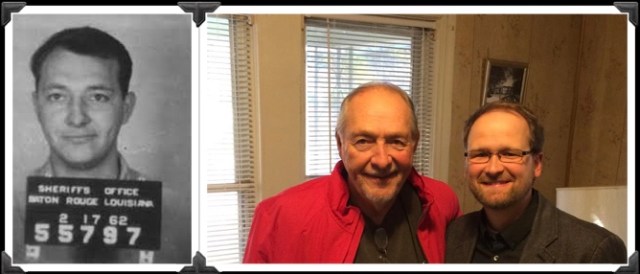
Zelner & Me.001

From a family line of KKK members, Bob Zellner became one of the first white southerners to engage in the early civil rights movement. He organized sit-ins, rallies, investigations and speeches from Missouri to Massachusetts. He was insulted, violently attacked, beaten unconscious, and arrested over 18 times became one of the first whites worked and led with Dr. King, Rosa Parks, Julian Bond and others during the civil rights era in Alabama and Mississippi. He takes Jesus seriously.

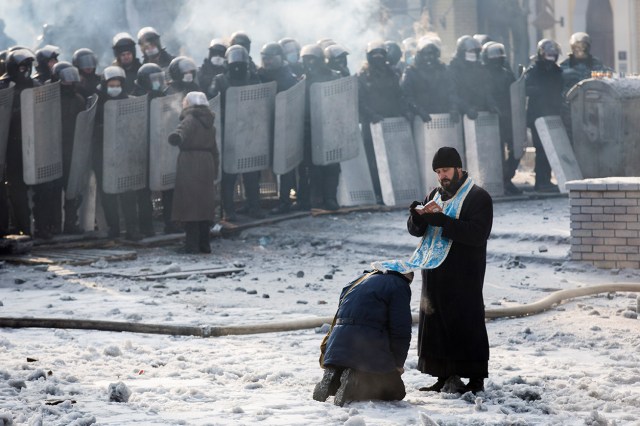
Protests Continue In Kiev As The Opposition Calls For A Snap Election

A man kneels before an Orthodox priest in an area separating police and anti-government protesters near Dynamo Stadium on Jan. 25, 2014, in Kiev. (Rob Stothard/Getty Images)

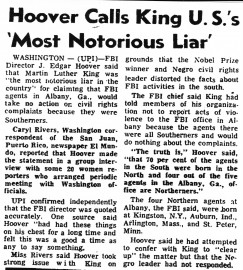
J.-Edgar-Hoover-and-Martin-Luther-King

Sometimes national leaders get in on the label-making, like then FBI Chief J. Edgar Hoover.


Posted in Uncategorized | 4 Comments

When Timothy Is My Pastor

As a pastor I read Paul’s letters to Timothy often. Timothy was Paul’s protege of sorts. He was young and seems to have been a courageous man. According to christian tradition at the age of 80 Timothy was dragged through the streets and stoned to death for trying to disrupt a religious procession for the goddess Diana. 

One day it occurred to me to read this letter from a different point of view. I’m reading it slowly imagining that Timothy is the pastor of the church I’m a part of in my city. 

I imagine gathering with our missional community in our neighborhood. Timothy is there, week in and week out. Questions always come up about what it means to live as citizens of God’s kingdom here in this place. I listen to what he has to say when he chimes in. I see how he listens, how he handles the ideologies and frustrations of others; how he handles his own. It puzzles me how he gets fired up over some things while appearing disinterested in others. I don’t always agree with what he says. I don’t always see what he sees. 

I imagine myself gathering with the church in our large gatherings on Sundays. As one people we share in the liturgy, hope to hear a word from God, and come to the Lord’s Table. But before the Eucharist I can see Timothy come before us, open the Scriptures, and speak. He invites us to imagine what it could look like if Jesus is King. He reminds us of things we know but have forgotten, or maybe dismissed. We are stirred. We are convicted. We are hopeful. At times I confess that the words he shares irritates me, sometimes confounds me and sometimes comforts me. The way he talks about what the Spirit could be up to out ahead of us both excites me and bothers me. Then he turns his attention to the Eucharistic Table. There he invites us to remember whose we are and who we are. Some Sundays what he says is resolved at the Table. Sometimes it creates tension. But at the Table it makes a little more sense and we find a way to move forward in light of it all because Jesus is Lord and we’re in this together. We can join His Spirit who is at work among us, between us and out ahead of us. We can love each other, our neighbors and our enemies. And we can trust God with the consequences because He loves us. 

Timothy still says things that press in to my way of seeing the world. I ask him to meet. I share my concerns. He listens and tries to help me reason through it. Finally, he pulls out a letter the apostle Paul sent him some time ago. Paul believes the Spirit entrusted our church to him and him to our church. Timothy tells me he’s doing the best he can to stay faithful to what Paul told him God wants him to do. He admits he could be off or wrong, but he, like me, is trying to stay faithful to our confession of faith and to his calling as our pastor. He hands a section of the letter to me. This what it says:

“I solemnly urge you in the presence of God and Christ Jesus, who will someday judge the living and the dead when he comes to set up his Kingdom: Preach the word of God. Be prepared, whether the time is favorable or not. Patiently correct, rebuke, and encourage your people with good teaching. For a time is coming when people will no longer listen to sound and wholesome teaching. They will follow their own desires and will look for teachers who will tell them whatever their itching ears want to hear. They will reject the truth and chase after myths. But you should keep a clear mind in every situation. Don’t be afraid of suffering for the Lord. Work at telling others the Good News, and fully carry out the ministry God has given you.” ~2 Timothy 4:1-5

Reading Timothy this way is sobering.

No wonder Timothy was dragged through the streets and stoned to death. 

Posted in Uncategorized | Leave a comment

Two Stories of Almost Unimaginable Faith

In our good country christians enjoy safety and security. In others christians live every day with the possibility of death. They are pushed toward an allegiance to Christ as Lord that is unbreakable, resulting in a deep dependency and trust that for many of us seems unimaginable. Yet their stories and actions show us that it is not only imaginable, but possible and even necessary.

Every week I read from the Voice of the Martyrs. I have donated and read their publications for almost 17 years (I hope you’ll consider giving to them too and subscribe to their publications). The stories of brothers and sisters all across the world has greatly shaped my faith and over and again proven my need to mature as a Christ follower. They are my teachers.

I’ve also read the works of the early church fathers for 17 years. These theologians and leaders have played a pivotal role in my understanding of what it looks like to possess a high view of the Scriptures and trust the promises of God revealed in Jesus Christ. With all their imperfections (like us they were heavily influenced by their cultures, resulting in questionable points of view in matters of gender and race), they loved the Lord and His Church, and many died a martyrs death to prove it. Plus, I am always stirred by the language with which they express faith is compelling. We just don’t talk like that anymore. They too are my teachers.

I offer two parallel stories here. One is from Syria in a 21st century world of globalization and taken directly from Voice of the Martyrs. The other is from Alexandria Greece in a 3rd century world ruled by Rome.¹

Both stories are of real people living in real places in really difficult times confessing the same allegiance to the Lordship of Christ.

Sister Nouha of Syria
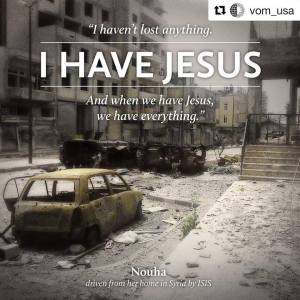
20374649_10159402034505508_1453033797267871789_n“Sister ‘Nouha,’ a Syrian believer and her family were driven from their home by ISIS. They lost their businesses, home, land, and worst of all many people they loved. She was asked by a Voice of the Martyrs worker: “Nouha, you’ve lost a lot. Why is it worth it to you to follow Jesus?”

She responded: “I haven’t lost anything. I have Jesus. And when we have Jesus, we have everything.” 

Nouha and her family have chosen to stay in Syria to help build up the church and reach out in love to Muslims. Pray for sister Nouha and the many believers like her who have chosen to stay. May we always be motivated by the worth of Christ, no matter what happens.”

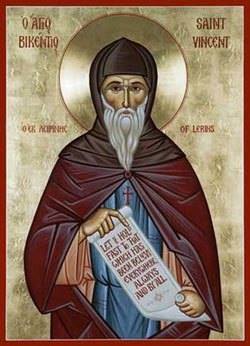
Origin Adamantius of Alexandria, 185-254 AD
20430139_10159400690725508_3853651434786369053_n

Origen once said,

“To those who ask us whence we have come or whom we have for a leader, we say that we have come in accordance with the counsels of Jesus to cut down our warlike and arrogant swords of argument into ploughshares, and we convert into sickles the spears we formerly used in fighting. For we no longer take ‘sword against a nation,’ nor do we learn ‘any more to make war,’ having become sons of peace for the sake of Jesus, who is our leader, instead of following the ancestral customs in which we were strangers to the covenants.”

Origen was born in Alexandria. At age 18 he opened a grammar school to support his family around the time his father was beheaded for his christian faith. It is there he copied texts and instructed those seeking to become members of the church. He also studied under the pagan philosopher Ammonius Saccas in order to better understand paganism and give reasonable arguments for the faith he confessed.

Origen spent 20 years working on his “Hexapla,” a massive work of Old Testament analysis written to answer Jewish and Gnostic critics of Christianity. This work was so important that it became a significant step in the development of the Christian canon (the Bible as we know it) and scriptural translation.

In no way was he flawless in his interpretations of Scripture. But he was dedicated to understanding what it looked like for God to reorder the world through the Lordship of Jesus and the coming of his kingdom so the Church could embody a witness of faith, hope and love. Origen wanted those who confessed Jesus as Lord to be able to trust him fully in complete loyalty and total allegiance rather than fall prey to Caesar’s decrees of complete loyalty and total allegiance. To Origen faith (pistis) meant more than affection or a belief in God or his promises, and is about trust, loyalty and a total allegiance grounded in love. Speaking of faith in these terms makes it clear that what’s expected of christians as adopted children and heirs and subjects of God’s kingdom is a call to embodied faithfulness to the Lordship of Jesus. This kind of faith renders the distinctions between ‘faith’ and ‘works’ absurd, for a child and heir to God’s kingdom cannot be loyal to their King without following His commands.

Origen recognized that all ruling powers, like Rome, would regularly be at odds with the reign of God in Christ and contend with christian faithfulness. He believed that God’s reign had to become concretely visible to the world through a people who lived by faith (trusting allegiance) expressed in love (for God, fellow christian, neighbor, and enemy), committed to peace (shalom), and anchored in hope (that God’s promises of life eternal are true). Christians will not change society by trying to change society. Christians will change society by living faithfully in society as subjects of a different King. It is this conviction that caused him to say what I quote above.

The authorities were not impressed. In 250 the Roman emperor Decius had Origen imprisoned and tortured. He was deliberately kept alive in the hope that he would renounce his faith. But Decius died first and Origen was released. With his health inalterably damaged, Origen died soon after.

A Cloud of Witnesses

Stories like these always draw my attention back to the Scriptures where it is said:

“Therefore, since we also have such a large cloud of witnesses surrounding us, let us lay aside every weight and the sin that so easily ensnares us. Let us run with endurance the race that lies before us,  keeping our eyes on Jesus, the source and perfecter of our faith, who for the joy that lay before Him endured a cross and despised the shame and has sat down at the right hand of God’s throne.” ~ Hebrews 12:1-3


¹ By globalization I mean the process of interaction and integration of goods, services and cultures between companies and governments of nations.
Posted in Uncategorized | 1 Comment

The Beauty of the Greatest Commandments as Our Great Commission

I’ve been thinking about how the Christian life has been anchored in what Christians (mostly preachers and scholars) have branded as the “Great Commission” (Matthew 28:16ff), despite the fact the Scriptures never explicitly or implicitly refer to it in that way. Yet, the Lord Jesus explicitly calls loving God and loving our neighbors as we love ourselves the “greatest and most important commandment” (Matthew 22:37-40).

I can’t help but wonder if we should’ve always anchored the Christian life in what Jesus considered “greatest” rather than what preachers branded as “great.” Maybe then we would have never viewed people as projects to fix, problems to solve or prospects to save, but rather as persons to be loved and embraced just as they are.

How different society might look if the Church would have kept first things first. How different people might feel about Christianity if we would’ve considered what the Lord called “greatest and most important” as the “Great Commission.”

As I listen to my friends who are not Christians I’m learning that they are weary of words. There are too many politicians on both sides making empty promises. There are too many talking heads on television diagnosing the ills of society with no attempt to prescribe a meaningful cure. There are too many Christians who do not seem to be preaching what we’re practicing.

All of this has led me to ask, what if the Church took the greatest commands as our great commission seriously and practically? What if the Church decided to position herself in the world in such a way that others might see the beauty of Christ through the faithful presence of his Holy Spirit filled people call “the Church.”

As I listen to my neighbors I’ve come to believe that the Church can no longer alienate herself from all that is wrong in society. We must enter into it and display something beautiful. We must display a love that is life-giving and offers peace and hope to a world of racked by fear.

FullSizeRender.jpg

If this is to happen the Church must lay down her anger and replace her defensive posture with the likeness of Christ on the cross–with outstretched arms ready to welcome the weary and hurting and displaced. We must say with our actions that anyone looking for rest, for comfort, for rescue, for security, or to put it another way, a place to call home, can be at home with us because Jesus is Lord.

Our task must no longer be bound up in impassioned attempts to protest the world into a morality, but to project the beauty of God’s passionate love in Jesus Christ by how we embody our beliefs.

Our task can no longer be formed by an understanding that people are projects to fix, problems to solve, or prospects to save, but rather persons to be loved, welcomed and embraced, just as they are. After all, we believe that God loves us just as we are and not as we should be.

Our task must move beyond party-political action, argumentative venting, and to bearing witness to the beautiful presence of Christ among us be enacting gracious hospitality, compassion and self-giving love.

Think about what would happen if we rearranged our lives around a common life committed to the love and life of the beautiful Christ. What if we started with the simple things?

We could make sure that no one in proximity spends a holiday meal alone. We can pay attention to all the single or widowed people around us and make sure they do not celebrate birthdays alone. We can begin seeing the people who greet us in local stores and simply ask them for their name?

What if instead of giving a person living through homelessness money we gave her a meal so we could give her our undivided attention? What if when we made dessert we prepared one more for the single mama living next door or who works in our department?

When we  purchase our toiletries we can purchase a little extra so we can give them to those who cannot afford them. Every time we buy a new shirt for ourselves we can commit to either buy an additional one for the clothing bank or chose to give away one we already own (a really nice one, so that someone else could have a nice shirt too).

What if we tipped servers better, especially the ones who give terrible service?

Velese and Envoy 279What if when we cut our grass we cut the neighbor’s grass too? What if we hosted a back-to-school party for a neighborhood?

What if we made our homes available to others and extended our tables or adopted a refugee family or committed to help housing a neighbor living through homelessness or spent time with the person who lives in a nursing home?

We may not be able to wield miracles like Christ, like heal the sick or raise the dead to life. We may not be able to draw mega-crowds as we tell life-changing stories that make accessible eternal truths.

But we can love.

We can display the beauty of Christ by how we give of ourselves. As the Church we can organize our life around what Jesus told us was the greatest and most important command. We can make love our great commission. Perhaps then disciples will be made.

IMG_8837


Posted in Uncategorized | 4 Comments