-
Join 1,915 other subscribers
Follow me on Twitter
Tweets by LigginLike?
-
Recent Posts
Archives
- November 2024
- April 2024
- February 2024
- November 2023
- October 2023
- September 2023
- July 2023
- June 2023
- May 2023
- April 2023
- March 2023
- February 2023
- January 2023
- December 2022
- October 2022
- September 2022
- August 2022
- July 2022
- June 2022
- May 2022
- April 2022
- March 2022
- February 2022
- January 2022
- December 2021
- November 2021
- October 2021
- September 2021
- August 2021
- July 2021
- June 2021
- May 2021
- April 2021
- March 2021
- February 2021
- January 2021
- December 2020
- November 2020
- October 2020
- September 2020
- August 2020
- July 2020
- June 2020
- May 2020
- April 2020
- March 2020
- February 2020
- January 2020
- October 2019
- September 2019
- August 2019
- December 2018
- November 2018
- October 2018
- June 2018
- May 2018
- March 2018
- February 2018
- December 2017
- November 2017
- October 2017
- August 2017
- May 2017
- April 2017
- February 2017
- December 2016
- November 2016
- October 2016
- May 2016
- April 2016
- February 2016
- December 2015
- October 2015
- July 2015
- June 2015
- May 2015
- April 2015
- March 2015
- February 2015
- January 2015
- December 2014
- November 2014
- October 2014
- September 2014
- July 2014
- June 2014
- May 2014
- April 2014
- March 2014
- December 2013
- August 2013
- July 2013
- June 2013
- May 2013
- March 2013
- January 2013
- December 2012
- November 2012
- October 2012
- September 2012
- August 2012
- July 2012
- April 2012
- February 2012
- January 2012
- December 2011
- November 2011
- October 2011
- August 2011
- July 2011
- April 2011
- February 2011
- December 2010
- November 2010
- September 2010
Blogroll
- Kingdom Clues by Chris Chappotin Thought provoking, missional and honest.
- Kingdom Seeking by Rex Butts A thoughtful blog concerning all things ministry and missional living.
- Restoration by Luke Hughes Practical missional and witty thoughts from my dear friend Luke Hughes
- The Forgiveness Factor by James Jones Convicting and practical thoughts served up by from my good coffee drinking friend James Jones
- Theologically rich thoughts about God's Kingdom and Missional living by Dr. Gailyn VanRheenen Gailyn is a dear friend, mentor and leader in my life. Read his blog often. It will challenge, bless and inspire you.
- Through Orange Colored Glasses My dearest mentor, friend, brother, pastor, activist and example. Read it. You won’t be sorry that you did.
- Williamsburg Christian Church's Blog Get Sunday Wrap-Ups, Insights Along The Way, Practical Ways To Live Missionally, Weekly Updates, & Special Announcements
No Instagram images were found.
Categories
Looking for a specific conversation?
Advent Peace: Will We Choose the Path of Peace

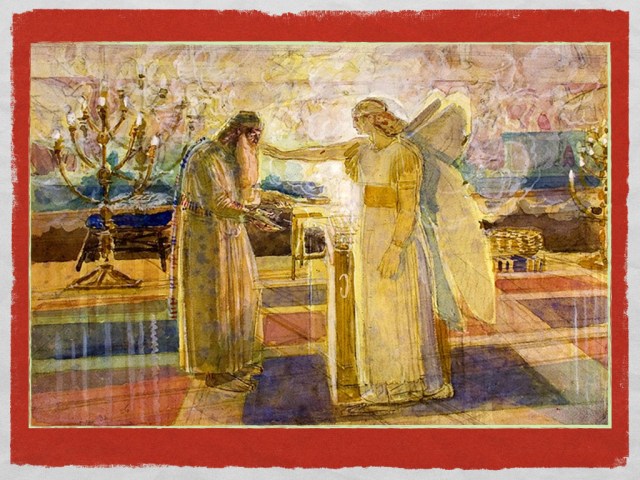
Luke begins his gospel with a priest named Zechariah, and his wife, named Elizabeth. They are a devoutly religious couple going about their everyday life. Childless in a culture that mocks such a thing, they are well past childbearing age. Today is Zechariah’s turn to come into Jerusalem and perform the Temple-liturgy. Since he and Elizabeth lived outside of Jerusalem, Zechariah will stay in one of the hotel lodges in the Temple precinct, and then return home to continue his work of teaching and leading in the community. Or at least so he thought.
The angel reveals to Zechariah God’s unfolding plan. Part of it involves them becoming parents of John, who we will come to know as “the baptizer.” Luke tells us Zechariah’s response and it sounds a lot less like a hero of the faith and more like you and me: “Can God really do the impossible? How can I know this be true?”
After 400 years of silence, the people of Israel had forgotten about God’s peace and bought into a vision of the world that convinced them God was no longer open to new possibilities. Oh, they would have never said such a thing with their lips but they were whispering it with their lives. They all responded like Zechariah, singing the same refrain from the same song the people of God have been lamenting for 400 years: “Can God really do the impossible? How can we know this to be true?”
We should not blame them. Something was wrong in their world. Herod was not the king God promised, that is clear. Wicked foreigners have come from far away with hatred in their eyes and weapons in their hands. Darkness and death are swallowing their land. People are suffering. Their people are suffering.
God’s people, people like Zechariah and Elizabeth, had forgotten about the possibility of peace. And when you forget about peace it is because you have forgotten God’s promises. And when you forget God’s promises, you’re left with having to figure it out on your own.
Some things never change, I suppose. Today it seems that we have forgotten about God’s peace. Like the devoutly religious Zechariah we are tempted to believe the vision of the world cast for us by society where we ask, “Can God really do the impossible? How can I know this to be true?”
Something is still wrong with our world. People are still suffering. Society tells us that if we are to eliminate the suffering or feel safe and secure, then it is up to us to make it happen, and we must use any means necessary. They tell us that if we want to have the ‘good life’ we must attain upward mobility and accumulate greater wealth. They tell us that we will find comfort in these things. But there is no comfort. The path of upward mobility is hard. The accumulation of wealth seems illusive. And it doesn’t feel any safer or more secure from the last time we tried to make it happen by using every means at our disposal.
So we tighten our grip on life, liberty and the pursuit of happiness in a kingdom that will, like all other kingdoms of the past, one day be a footnote in the pages of history. We dig in our heels with great resolve motivated by an anxiety-producing fear that turns the Christ’s crown of thorns into barb-wire fences to keep us safe and secure from those we consider threats to our well-being.
Well, eventually Zechariah believed the good news of Advent. In his song he prophesied that Christ would, “shine light to those who sit in darkness and in the shadow of death, and guide our feet to the path of peace.” (Luke 1:79)
The Lordship of the Christ-child is our peace, and our restoration His promise. Christ the King has come and the light has dawned to scatter the darkness and the shadow of death. But will we allow the light of Christ to guide us to the path of peace? What if the path of peace is not what we think? What if the light that guides us to the path of peace shines upon the practices of hospitality, generosity and forgiveness?
The light of Christ reveals that when the strangers and the marginalized are welcomed and embraced, the path of peace is found. The light of Christ reveals that when we are finally convinced that giving is more blessed than receiving, the path of peace is found. The light of Christ reveals that when wrongs and betrayals are forgiven, and enemies are loved and persecutors are blessed, the path of peace is found.
Oh, but the path is riddled with distractions and seductions. Scattered along the path is the temptation to pursuit other things we believe can bring us peace, like upward mobility, greater wealth, national security, the ability to control life or manage outcomes. Scattered along the path are fears and anxiety that comes from a stark realization that we really cannot control life or manage outcomes after all, especially when we watch the evening news or read the headlines that speak of terror and violence.
And so the story goes that we will be tempted to tighten our grip on life, liberty and the pursuit of happiness in a kingdom that will, like all other kingdoms of the past, one day be a footnote in the pages of history.
But the good news is that that Advent proposes to us the King of kings who invites us to a kingdom that will never falter, flounder or fail. He will guide our feet to the path of peace, if we will trust Him.
And so the story goes that we will be tempted to dig in our heels with great resolve motivated by an anxiety-producing fear that turns the Christ’s crown of thorns into barb-wire fences to keep us safe and secure from those who threaten our well-being.
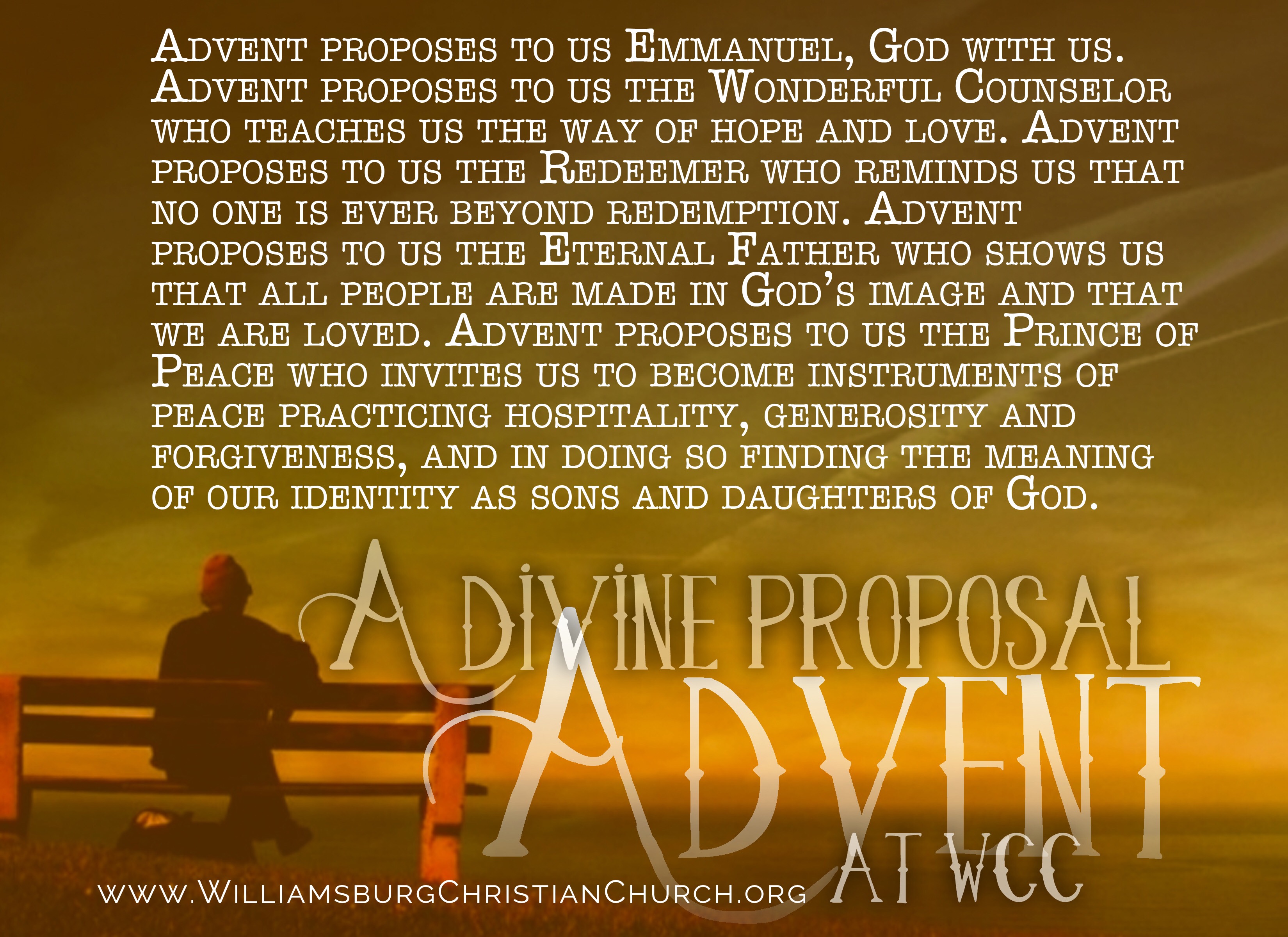
But the good news is that Advent proposes to us Emmanuel, God with us, and He reminds us that His ever-present Kingship and the eternal life He brings is our well-being. Advent proposes to us the Wonderful Counselor who teaches us the way of hope and love. Advent proposes to us the Redeemer who reminds us that no one is ever beyond redemption. Advent proposes to us the Eternal Father who shows us that all people are made in God’s image and that we are loved far more than we can ever imagine. Advent proposes to us the Prince of Peace who invites us to become instruments of peace where, when we practice hospitality, generosity and forgiveness, we find the meaning of our identity as sons and daughters of God.
Something is still wrong in our world. Wicked people come from the most unexpected places far and near, with hatred in their eyes and weapons in their hands. It still feels like darkness and death is swallowing our world.
But Christ has come.
If we will trust Him, if we will believe that He is able to do the impossible, He will guide our feet to the path of peace. Hospitality, generosity and forgiveness reveal the way.
Come, Holy Spirit come, may you open the eyes of heart that we would know the depths of our Father’s love, and find the courage to trust Jesus Christ the Lord, our Prince of Peace.
Posted in Christian living, Church
1 Comment
My 6-Year-Old Is An Unexpected Theologian
My son is 6-years-old. If he were reading this he would probably want me to tell you that he turns seven in a month, so I guess I should mention it. The other day he reminded me of something he said earlier this year. I admit, when he originally said it I thought it was pretty awesome. But when he said it the other day his little insight has been on repeat in my mind:
“Daddy, I don’t know why people make fun of other people with different skin colors. God made all people and Jesus is every color.”
I’ve had this image of a multi-colored Jesus with a multi-ethnic face stuck in my mind every day since. Sure, I know that historically Jesus was of middle eastern descent, but what Ian sees in his 6-year-old mind fascinates me. Is this the child-like faith Jesus spoke of, a faith big enough to form an anything-is-possible imagination that causes my boy to see Jesus as every “color,” even while society tries to to convince him that Jesus looks like him? There is equity in my son’s Jesus. At the same time, my son isn’t buying into the idea that he should be “color blind,” either. Ian is beginning to see the beauty and purpose in “color” and ethnic diversity, and it’s beautiful because he believes it’s who God is; it’s what the Lord Jesus looks like to Ian.

My 6-year-old is an unexpected theologian.
This conversation opened the door to talking about what he has already seen in 1st grade, and how boys and girls of color are made fun of more than the boys and girls that look like him. It’s like Ian is willing to admit something some of us caucasian Americans deny: that there are people among us who are, for many reasons, more vulnerable to ridicule and marginalization in our society than others. By “vulnerability” I do not mean they are weak, rather they are more susceptible to marginalization and judgement based on their ethnicity, nationality, sexual preference, religion, or socio-economic class, and must be given particular attention so they too are able to flourish in the midst of marginalization and judgement.
Perhaps this is why the God of the Jews always made special mention of a quartet of people considered the most vulnerable among them–the poor, the widow, the orphan, and the immigrant (it’s there in the bible, over and over again. Look it up.). It’s as if God was saying to the people of Israel, “As you enjoy all I am giving to you, and as you flourish as my blessed people, remember that #poorlivesmatter, #immigrantlivesmatter, #orphanlivesmatter and #widowlivesmatter.” I am willing to bet money that some of the Jews, particularly the comfortable ones living in the center of society said, “But God, don’t #alllivesmatter?” If we open our bibles we will see God say something like this:
“Yes of course they do, but that is not my point. I am telling you to make special provision for these particular lives because there will come a time when you knowingly or unknowingly value them less than yourselves and put their livelihood in jeopardy as they become marginalized by your indifference or worse, your judgement or disdain. I want you to remember that these particular lives matter as much as yours, and that you too were once a marginalized and despised people.” 1
The Jews failed to understand that recognizing one people-group’s vulnerability is not the same as giving them a higher valuation over another, but about recognizing that some lives need particular provision because certain socio-cultural systems (plausibility structures and authorizing social-narratives) make it possible for these lives to be placed on a lower rung of society’s ladder. Commanding that special consideration be given to the lives of the poor, fatherless, immigrant and widow has always been God’s way of helping His people remember that they are valued and must not be abandoned in their marginalization when the ethnic majority or center of society fails to recognize their worth. It’s an historical reality that the Jews experienced and God didn’t want them to forget.
I think my son is learning more about God’s heart as he notices people of color being teased more than the children who look like him. So I encouraged him to stand with them:
“Son, #blacklivesmatter and they matter more than some people realize or want to admit. And when others forget or do not want to believe it, we need to help remind them because Jesus’ people know it to be true. Like you said, we believe that Jesus is every color and made every person of color. He thinks the diversity makes our world a more beautiful place, and so should we.”
My son is beginning to recognize vulnerability and marginalization when he sees it. Sometimes he sees Jesus more clearly than I. He is only 6-years-old, but I’m thinking I have much to learn from the beautiful simplicity of his child-like faith.
- Deuteronomy 10:12-19; 14:22-29; 16:11-14; 24:17-21; 26:13-19; 27:26; Jeremiah 7:3-7; 22:3; Malachi 3:5; Matthew 22:36-40; 25:31-46; Luke 14:15-23; Romans 15:7-13.
Posted in Uncategorized
2 Comments
The Church as a Subversive Kingdom Presence in the World (Insights from Chapter 7 of “Subterranean” by Dan White Jr.)
I am what some call an activist who serves as a pastor of a diverse faith community filled with people living from both the “center” and margins of our city. As a so-called activist I have many friends who advocate for justice with megaphones, picket signs (sometimes in the form of tweets), civil disobedience, and legislative agendas. All of that is fine I suppose, but it isn’t for me. I think there’s another way. In the seventh chapter of his book, Subterranean: Why the Future of the Church is Rootedness, Dan White, Jr. seems to agree. He suggests the way of practicing fidelity:
“Fidelity becomes the taproot of relating with God when you’re fully aware that opposing Powers are making claims over everyday life…The taproot of fidelity is only exercised when we become aware of the force of resistance around us. The subterranean church plays a subversive role in unsettling the evils in this present age, faithfully toiling together for justice, peace, belonging, and healing in our specific locations.”
In this chapter Dan calls the church away from a me-centered christian imagination shaped by the Jesus-is-my-personal-Lord-and-Savior rhetoric that has ultimately made us complicit to the other oppressive empires. He reminds us that the life-blood of the Spirit flows from the taproot of fidelity and gives birth to the subversive society God’s in-breaking kingdom intends to create. This is what Dan calls “the resistance movement of the church, faithful to the mission of being the subversive kingdom presence in the world.”
The modern church has failed to see what the early church understood so well, that the kingdoms of this age clash against the kingdom of God. “The Powers,” as Dan calls them, work against the new realities proposed to us by the reign of Christ. Our lack of awareness, nurtured by our consumeristic tendencies and self-centeredness, has caused us to ignore the Powers that have pressed into cruciformity and infiltrated the church. Consequently, we’re losing our identity as we steadily wander away from our call to subversive resistance to the Powers.
Dan reminds us that the church is a subversive society, but not the kind that fights in open belligerence for justice, peace, belonging, and healing by asserting power over others or managing outcomes. The church as the subversive kingdom presence in a particular location participates in a different kind of subversion, one that patiently embodies a cross-shaped imagination by self-giving love that works to undermine other expressions and understandings of power to create new possibilities and new realities. This “subterranean” way of being gives birth to a faithful community of disciples committed to the “difficult discipleship of discernment” who refuse to waiver from naming and engaging the Powers contrary to the way of God’s kingdom (Dan offers a brief but remarkable description of the process of naming and engaging in this chapter). This leads to practicing fidelity.
There’s so much more to say but I think you should just read the book. What makes this book special is that Dan writes as a pastor-theologian and practitioner whose writing style is thoughtful and accessible. It’s a captivating read. If you get a copy of his book before October 23 you’ll get 40% off by using the code ROOTED.
It’s been an honor to participate in the blog tour for this new book. Please be sure to read these recent posts, along with the posts to come:
Zach Hoag has written a review of Chapter 1: Hotels or Trees
Tim Suttle discusses Chapter 2: Excessive Personality
Ben Sternke reflects on Chapter 3: Extracted Perception
Kathleen Ward writes on Chapter 4: Expedited Production
Ray Holenbach discusses Chapter 6: Rooted in Fidelity
I write on Chapter 7: Practicing Fidelity
Look for Karina Kreminski’s reflection on Rooted in Locality next week.